Circle of Blue · 2017–18 · Earlier work
Blue Roots
How do you use digital storytelling to educate and engage 10–30 year olds about the global water crisis? That was the design challenge. The answer was a platform where the crisis is browsable by place, told by the people living it.
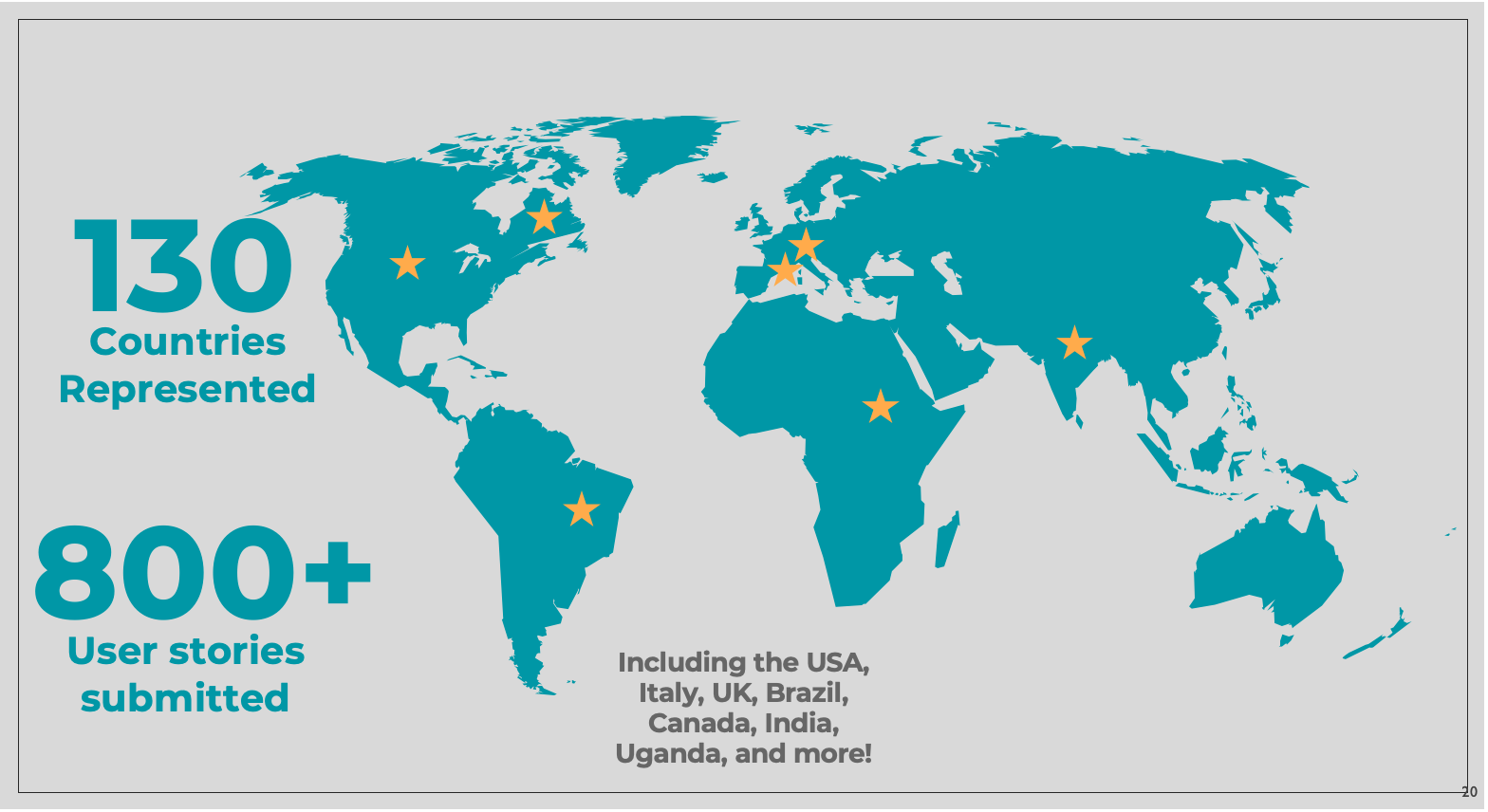
- 130
- Countries represented in the campaign
- 800+
- User stories submitted
- 10–30
- Target age group, against an existing audience of 35–55
- 3D
- Interactive globe, browsable by story location
The problem
The United Nations predicts that nearly half the world's population will be living in areas of high water stress by 2030 if current climate change predictions hold. Water scarcity in arid and semi-arid places could displace between 24 million and 700 million people. And yet most people in developed nations don't notice the water issues in the place they actually live.
Circle of Blue publishes valuable public information about environmental and water news at a national and global level. But it is hard for someone unfamiliar with these issues to find or synthesise any of it. Their audience — researchers, activists, journalists, policy makers and water experts, averaging 35 to 55 years old, known internally as "water buffalos" — already knew most of it.
The people who most needed to care were the ones the existing work reached least.
What research told us
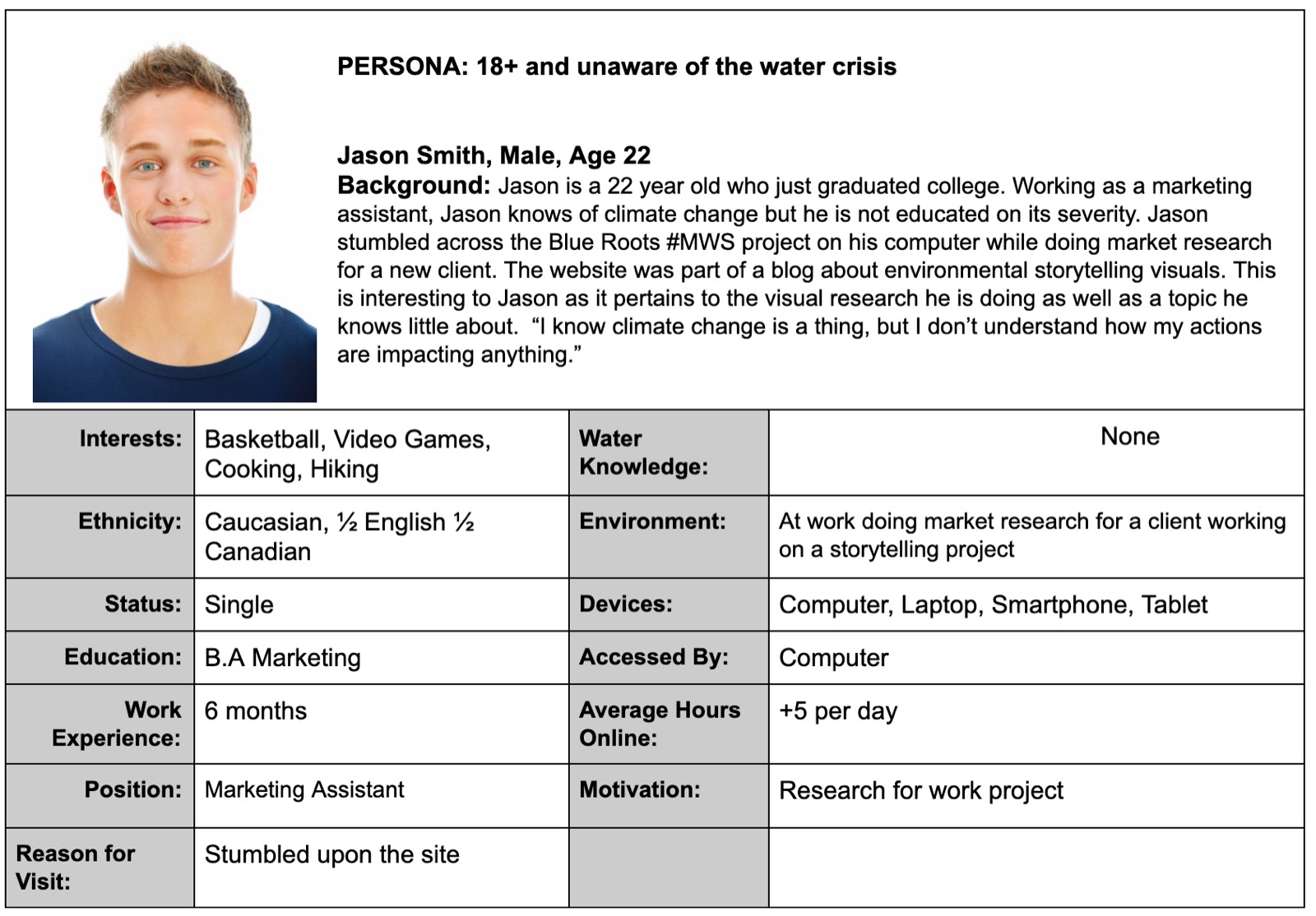
Primary & secondary, focus groups, usability testing- People in developed countries are unaware of threats to their own water. Most Americans don't know whether their water comes from a lake, groundwater, a reservoir or a river.
- Community is the motivator, not data. People engage when they see stories from friends and family.
- It has to be simple enough for every age in the range. A 10-year-old and a 30-year-old had to be able to use the same thing.
"I really want to see an active and engaged community that shares positive stories."
Pilot test participant
The #MyWaterStory campaign
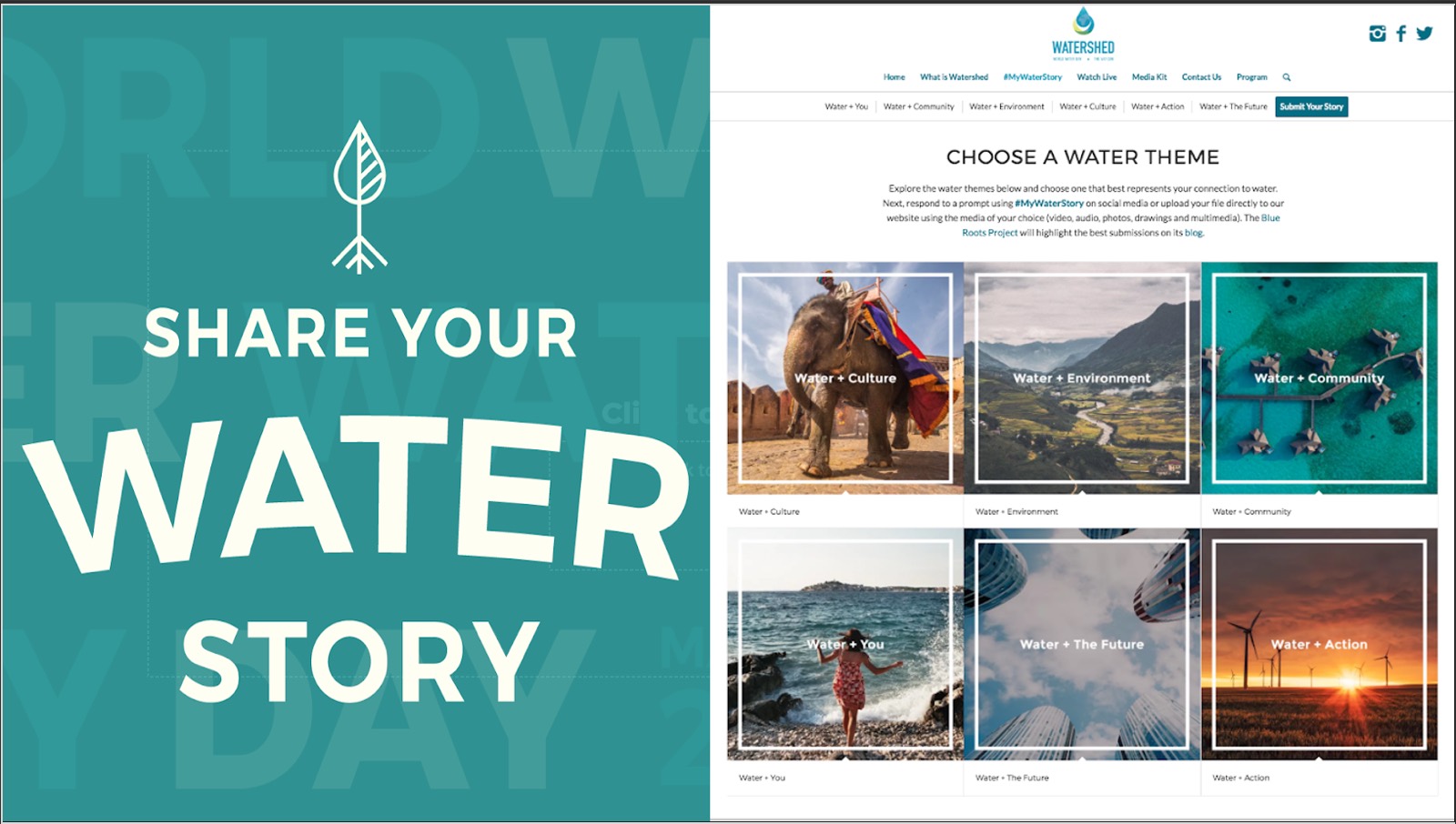
Research kept pointing at visual storytelling as the way awareness actually spreads. So the campaign asked people to post a water story that resonated with them, tagged #MyWaterStory — through the website or through Facebook, Twitter or Instagram. It launched on World Water Day alongside a transmedia marketing strategy built to start a dialogue rather than deliver a lecture.
The point was to give the public a way to share ideas and build community around them — to let people feel the impact of their own contribution by seeing water stories of personal and communal activism sitting next to theirs.
Designing the globe
The World Water Story website had to do two jobs at once: collate the stories coming in from around the world, and present facts and data about the global water situation in a way that held attention.
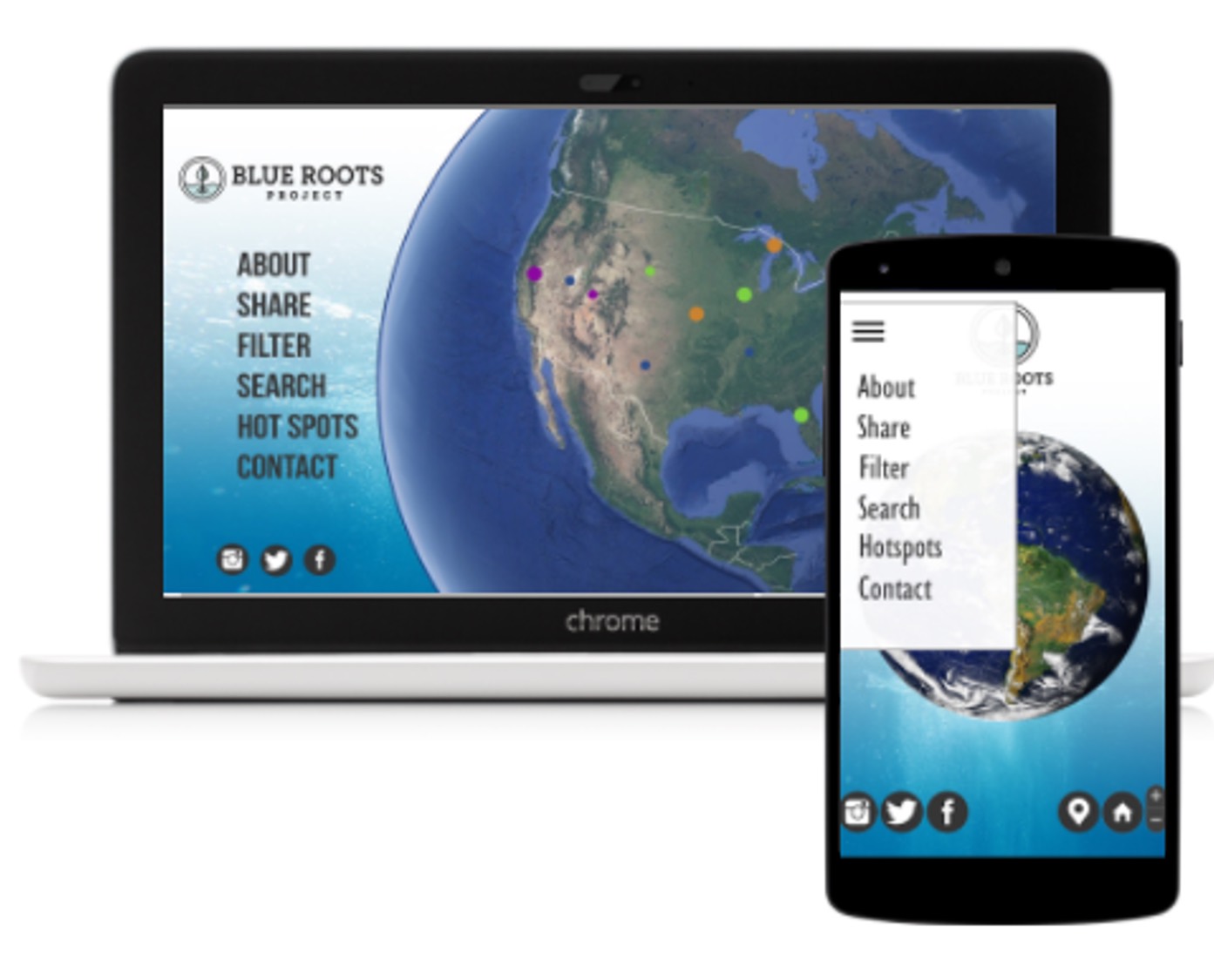
After several rounds of concepts and iterations, the final data visualisation was an interactive 3D globe displaying every current and future water story by location. You can zoom in and out to find and read stories, submit your own #MyWaterStory content, search what others have submitted, contact the project team, and explore facts about the water crisis.
Putting stories on a globe rather than in a feed was the whole argument: it makes the crisis local before it makes it global. You find your own place first.
Outcome
The #MyWaterStory campaign drew more than 800 user stories from 130 countries, including the USA, Italy, the UK, Brazil, Canada, India and Uganda — an audience well outside the 35-to-55 expert readership Circle of Blue started with.