PropertyGuru · Singapore · 2021–23
Featured Agent
A premium listing product that had been sold over the phone for years. I replaced the account-manager booking process with a self-serve product agents could buy themselves, any time of day.
- SGD $5M
- Revenue reached in 2022, after three flat years
- 24/7
- Booking, replacing office-hours-only phone calls
- 3–4 days
- Queue wait per agent ahead, removed entirely
- 20+
- Agents in post-launch testing panels
Featured Agent is a premium product that gives an agent maximum visibility — it highlights their listing among the top seven on the first page of search results, and features their profile on the first page of the search results page.
Background
Featured Agent had seen stagnant revenue for three years, with consistently low fill rates. Despite its potential as a premium listing product, adoption stayed limited — purchases were underwhelming whether agents bought directly or went through a sales representative. Repeat purchase rates were declining, which told us engagement wasn't sustaining after the first booking.
The goals we set:
- Grow Featured Agent revenue in Singapore to SGD $5M in 2022.
- Increase visibility, transparency and awareness of the product.
- Minimise the friction of manual operations.
How booking actually worked
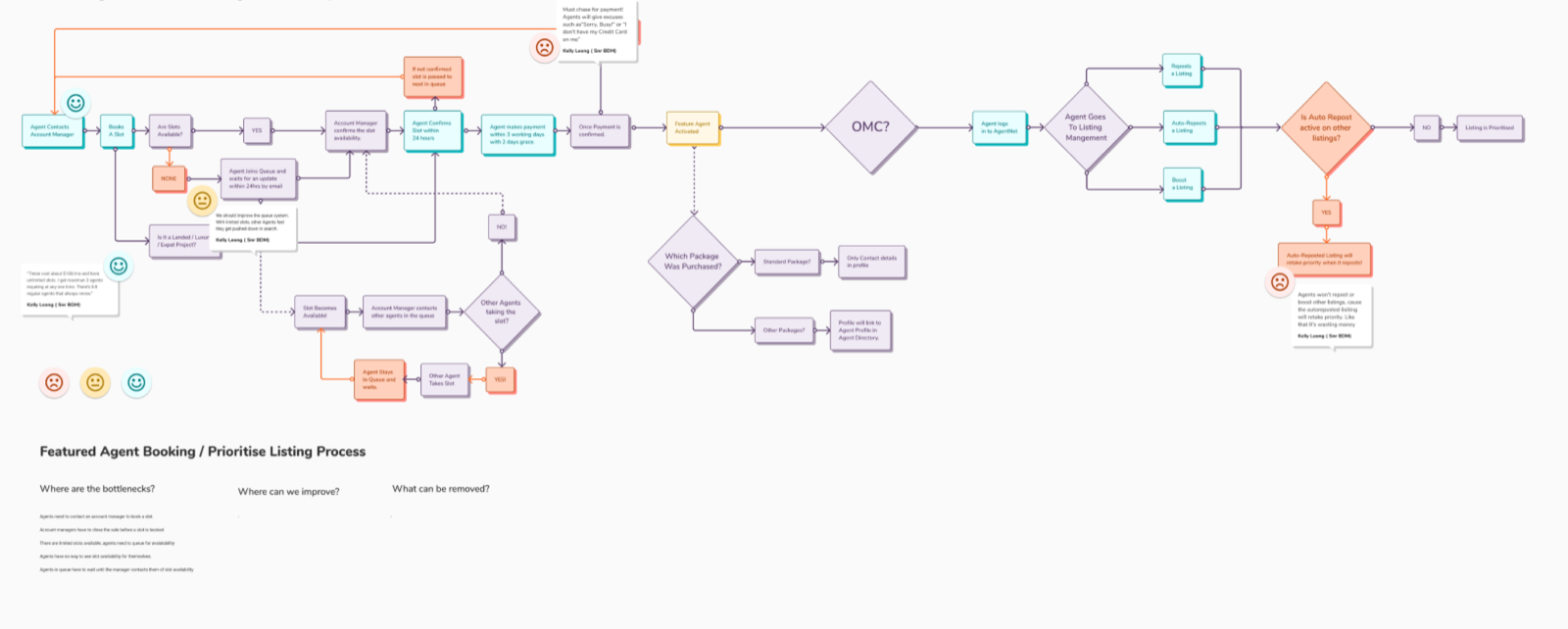
DiscoveryNothing about buying Featured Agent happened in the product. An agent phoned their account manager to ask what was available. The account manager checked, came back, and pushed for a purchase if a slot was open. If nothing was open, the agent joined a queue the account manager tracked by hand — and when a slot freed up, they had 24 hours to confirm by phone before it passed to the next agent in line.
Payment was no better. Featured Agent was a cash-term product, so agents read credit card numbers over the phone or waited for a payment link. They had three working days to complete payment or the slot was released back to the queue. Only once all of that cleared could an agent start prioritising listings within the project by boosting, reposting or auto-reposting.
Where it broke down
Six bottlenecks-
Entry point
Agents had to call in to purchase at all.
Buying only possible during office hours -
Human error
Account managers tracked new inquiries by hand while also working the waiting queue.
Missed inquiries, lost slots -
Payment
A cash-term product paid by reading a card number down the phone, or via a link the account manager sent.
3 working days to pay, or lose the slot -
Transparency
Slot availability and pricing appeared nowhere on the PropertyGuru website or on Agentnet.
No way to check without phoning -
Queue visibility
Agents in the queue couldn't see how many were ahead of them, or how long they'd wait.
Indefinite, unexplained waits -
Time
Agents waited for every agent ahead of them to confirm and pay before their turn came.
3–4 working days per agent ahead
Who we were designing for
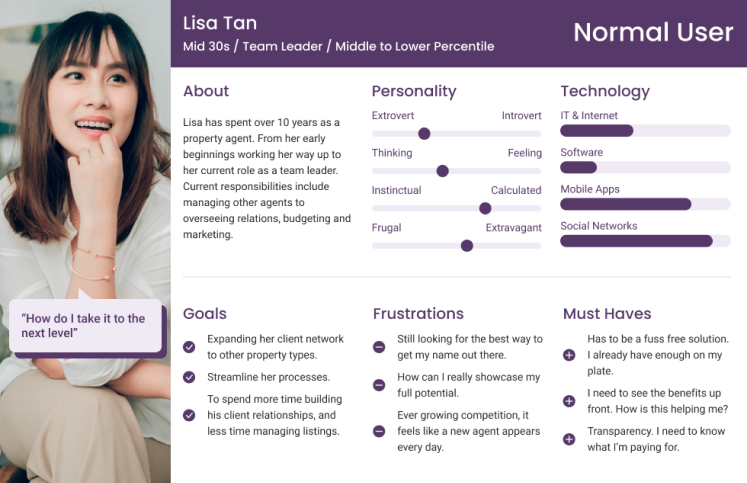
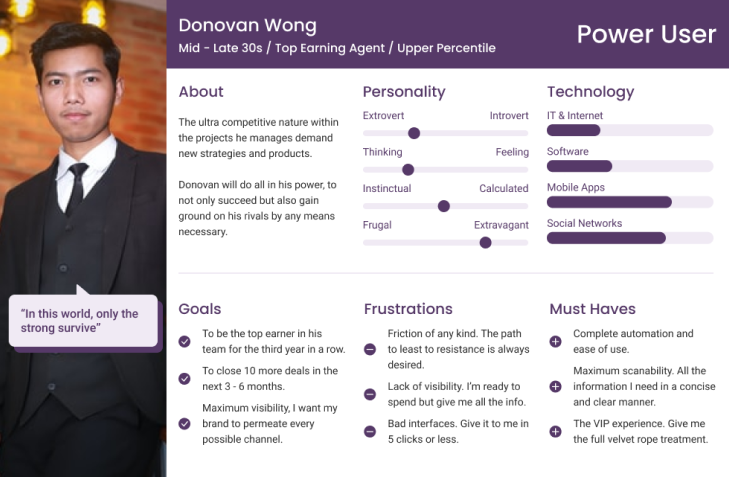
ResearchTwo archetypes, and they wanted opposite things. The normal user — middling volume, managing a team — needed the product to be fuss-free and to state its benefit up front. The power user already knew the value and just wanted the phone loop out of the way. A self-serve product had to satisfy both without becoming a configuration exercise.
Three things research made non-negotiable:
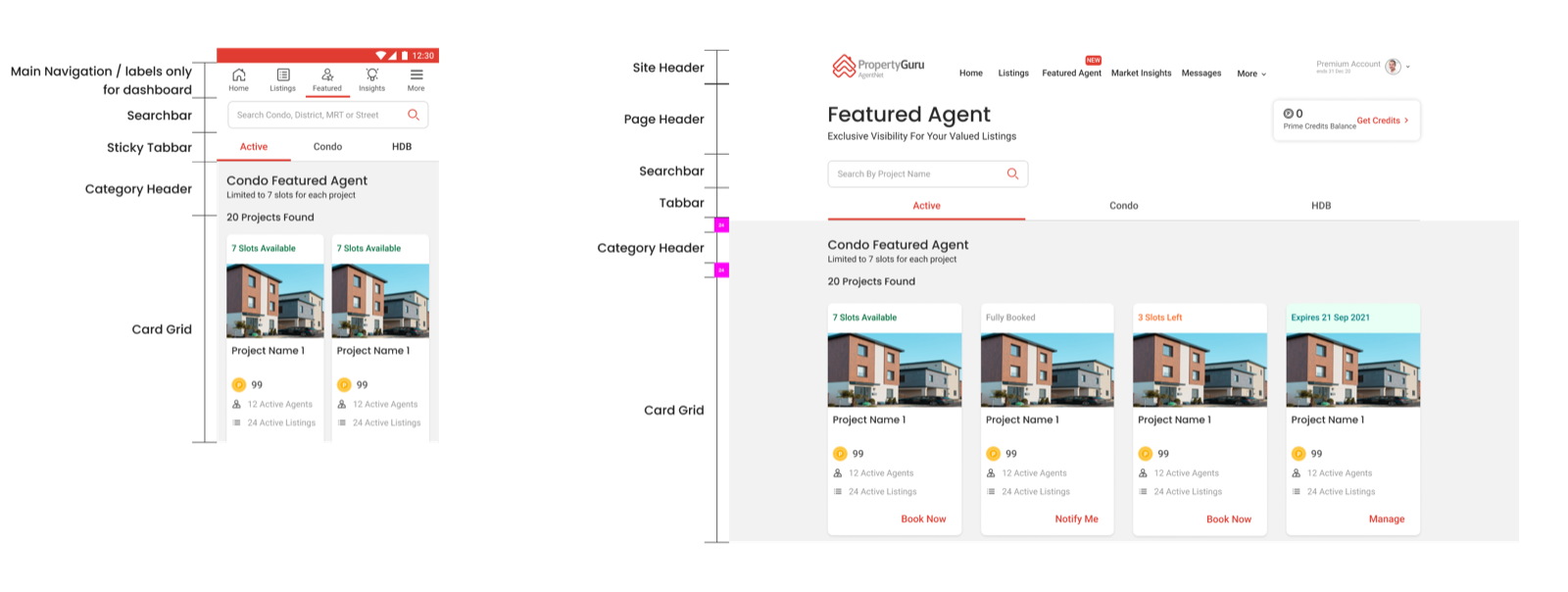
- Browsing. Agents need to see which Featured Agent slots are available per project, estate and district — and each slot must show its limited availability.
- Booking. Agents need to choose a slot on the platform and manage their own bookings afterwards.
- Payment. Agents need to pay in an in-built currency — credits — rather than a card transaction brokered by a person.
The solution
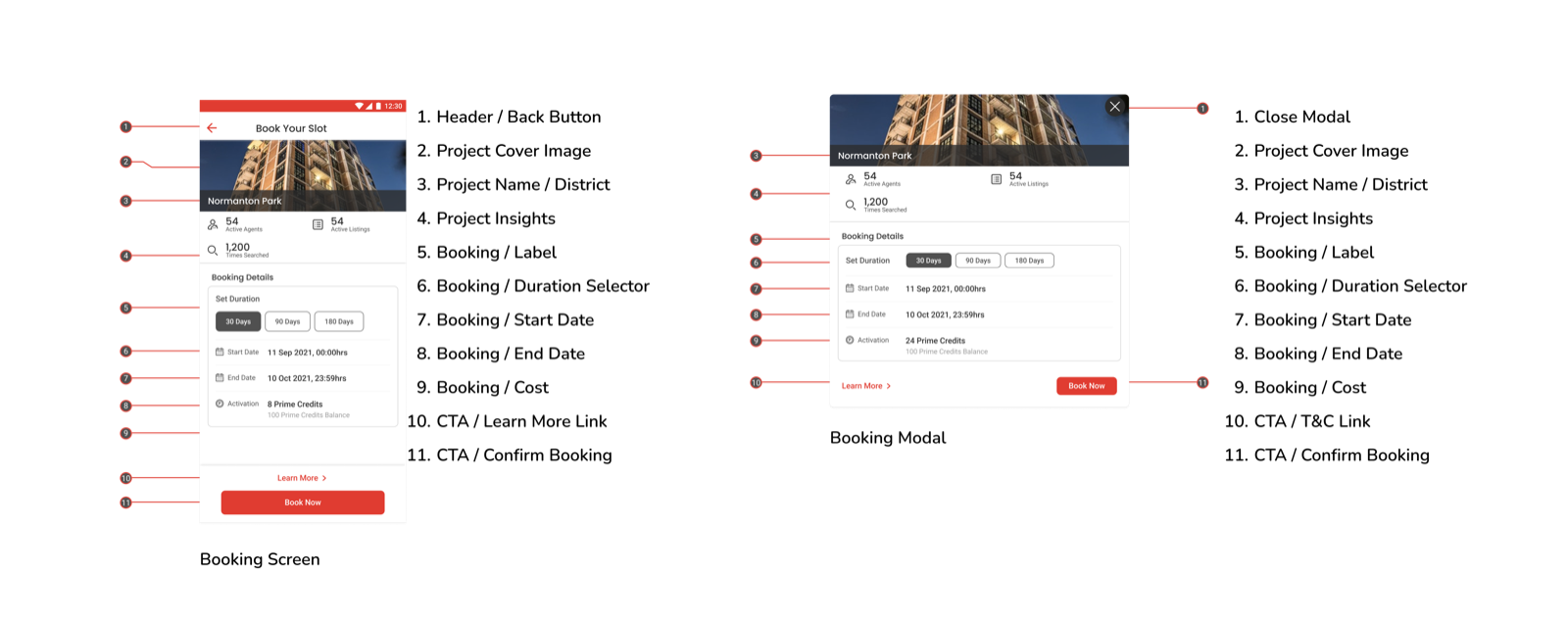
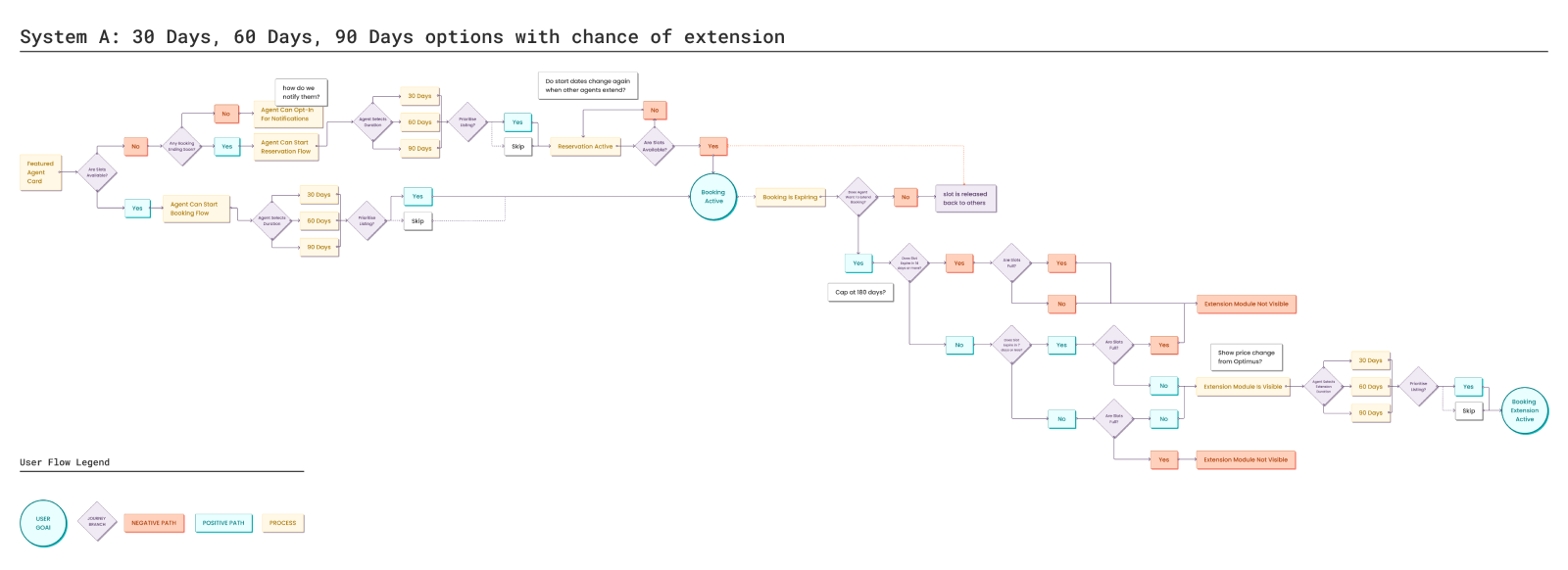
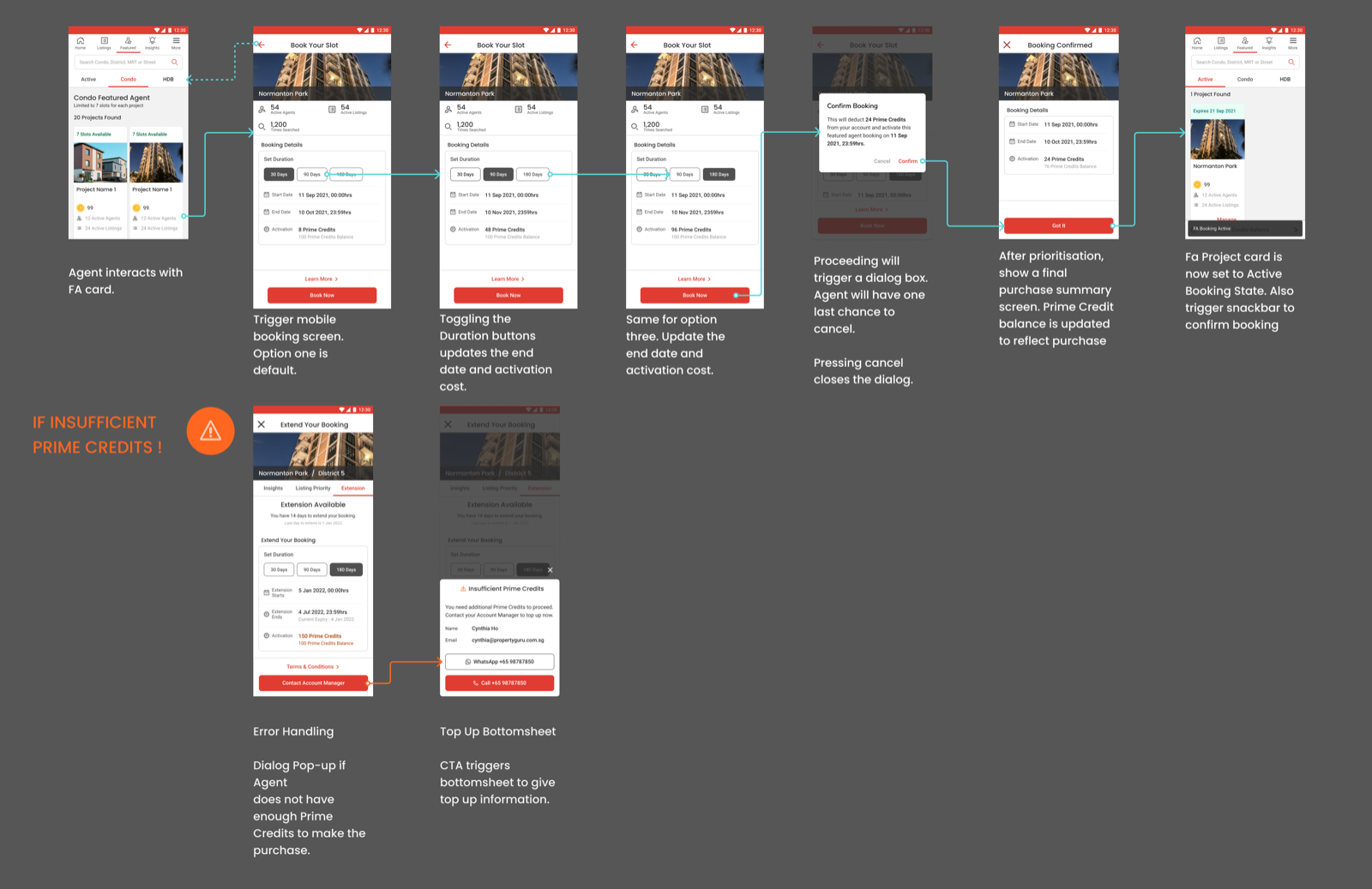
A new Featured Agent screen with a project, estate and district catalogue, reachable from the main navigation under its own link. Agents bypass the call-in system entirely and see for themselves what's available. The card layout gives them something to compare across projects — a far more tactile way to browse than extracting the same information from an account manager over the phone.

What testing changed
Post-MVPAfter the MVP shipped we ran usability sessions through agent panels, speaking to more than 20 agents. Self-serve was well received across every level of agent — but the consistent ask was for more decision-making information on the card and booking screen, not for changes to the flow itself.
"I would like to see the prices of the other listings. The highest to lowest or even the median value."
Agent, panel session · P1
"I would like to see the total amount of WhatsApp clicks for all the listings in this project. Or how much more leads total."
Agent, panel session · P2
"I would like to see the amount of unsold units in this particular project. If possible also the developer commission here."
Agent, panel session · P3
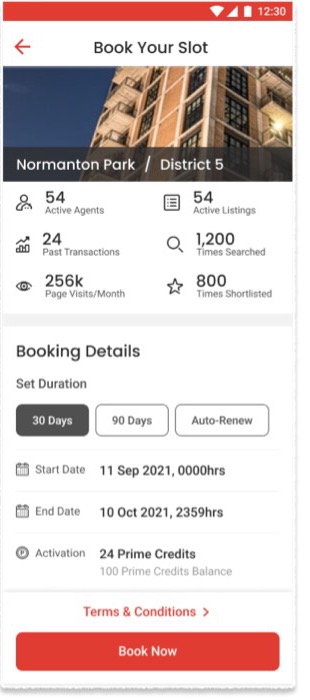
The through-line was that agents wanted to judge whether a slot was worth buying, not just whether it was available. We added the insights they asked for — times searched, total leads and times shortlisted — to the project insights block in subsequent releases.
Outcome
Featured Agent revenue in Singapore reached SGD $5M in 2022 — the target we set, and the first growth after three flat years. The booking process moved from office-hours phone calls and a hand-managed queue to a product agents operate themselves.